
The first Stationery Fest is now officially over and I have a lot of thoughts! The big overall takeaway was, I’m so glad Yoseka Stationery thought to do this, invested all this energy into pulling it off, and I hope they do it again.
For context:
- I got a three-day ticket (and went all three days)
- Signed up for a handful of workshops spread over the days
- I’m local so I didn’t need accommodations but I did have a bit of a commute to the venue
Stationery Fest was different than other stationery gatherings
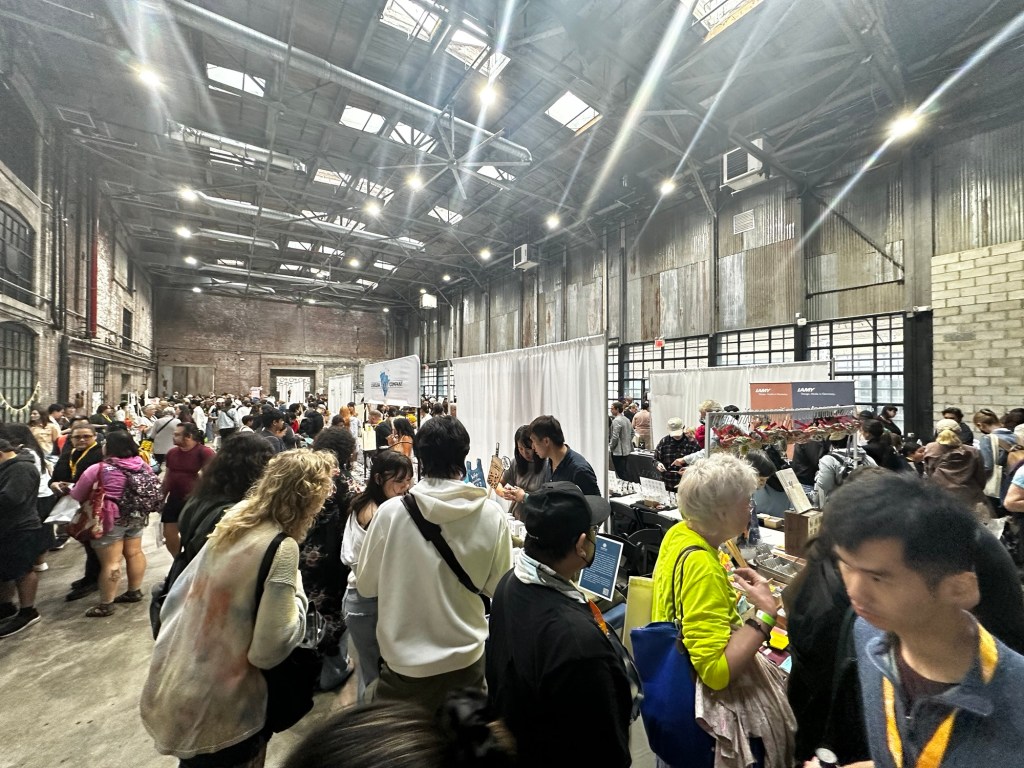
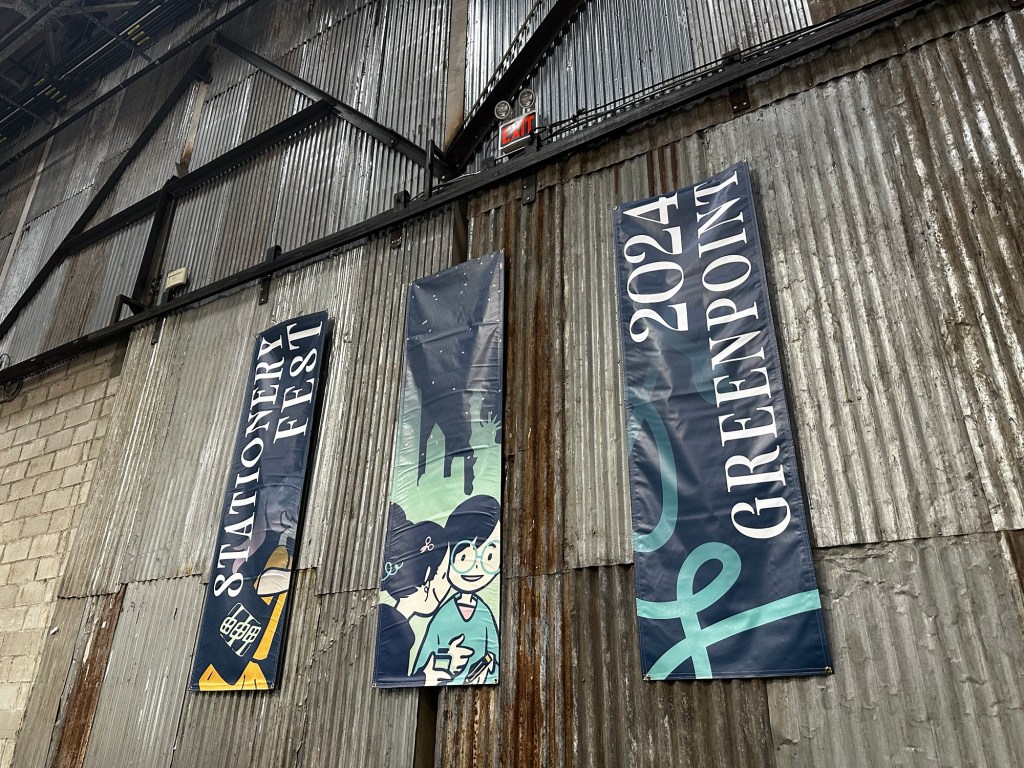
As far as in-person events go, the stationery world has a variety of opportunities for people to get together, but none in the U.S. focus on the broad world of stationery like Stationery Fest did. In my opinion, Stationery Fest had a number of unique attributes that overall made it a special experience. I hope they do it every year.
Fountain pen shows are one example—they take place all over the world, and in the U.S. alone one could easily be at different fountain pen shows all throughout the year. But these shows are focused predominantly on fountain pens. Ink, paper, and other accessories often have a presence but everything revolves around pens and because the shows have been happening for so long they’re all more or less predictable: people see familiar vendors and faces, and there are certain expectations and standards for what makes a show “good” or “successful.” There are established norms and etiquette, even.
Another type of event that is mostly “B2B” (business to business) are trade shows, where manufacturers and wholesalers demo their wares for retailers. Every industry has these, and regular consumers by and large don’t go to them because you can’t shop them—they’re exhibitions, like the Consumer Electronics Show in Vegas every January or car shows.
There are also informal clubs and meetups that are organized by enthusiasts.
Stationery Fest was different than all of these, in that it was consumer facing (B2C) and more balanced across all the different categories of stationery. So while Fountain Pen and ink vendors were present so were many different paper makers and retailers, accessories sellers, artists, etc. For the many people in the world who love paper as much as they love pens, and especially for those who don’t live in a place like Japan where amazing paper is abundant, this was a really special and unique experience.
Other ways that Stationery Fest was different
Yoseka being an Asian American business played a role in making this event different. Neil, half of the husband and wife team who own the store, is from Taiwan where his parents own a stationery store by the same name. I don’t know how much or little they work together or benefit from the connection, but Yoseka has always carried a variety of Asian stationery, pen and ink brands that aren’t available at every pen and stationery retailer in the U.S. Neil and Daisy are also excellent at curating products for a very specific audience of people who like these things. The only other U.S.-based retailer that carries a similar array of products and isn’t just an outpost of a Japanese retailer, is JetPens—also an Asian American business. Smaller shops like Baum-kuchen and nico neco Sakkara carry some, but not all, of these brands.
This is why I personally first became a customer of Yoseka—they stock Taiwanese ink brands and curate a lot of other cool stuff that I’d have to travel to Asia for if they didn’t sell them. A lot of these brands, such as Lennon Tool Bar, King Jim, High Tide, Yamamoto, Nagasawa, and Hobonichi, turned up at Stationery Fest. I do think some of these folks go to California pen shows as well, but they’re not at every U.S. pen show the way others are. It was a ton of fun to meet the people representing them and to talk to them about all the new things they have in development.
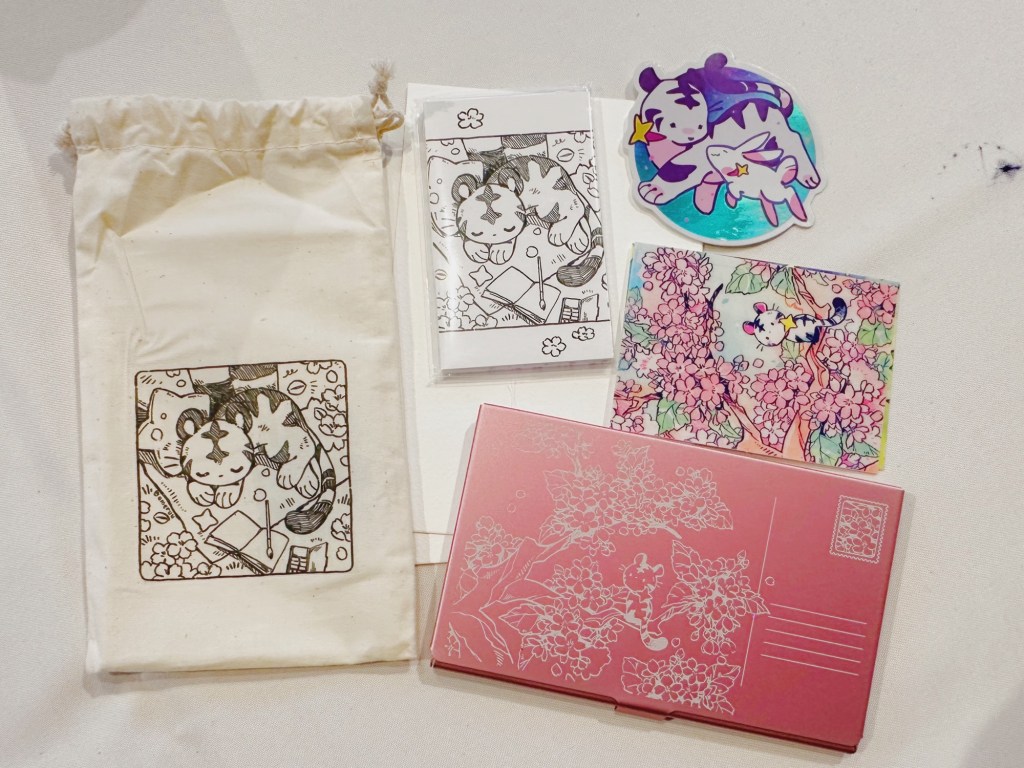
Stationery Fest also stood out for its celebration of creatives, particularly visual artists. Beyond the usual pen makers and craftspeople you’d see at any pen show, the marketplace was full of illustrators, painters, zine makers, risograph experts, and more. Workshops included hands on classes about different art mediums. This is very on brand for Yoseka, which employs artists in its store. Most of the Yoseka staff I’ve met are creatives of some kind and the store has created opportunities for them to pursue and market creative projects—something I love to see and am happy to support as a customer.
Last but not least, the show was different because of its location, which brought some problems but also many features. First of all, its New York. If anyone needed a reason to travel here, a stationery event is as good as any, and didn’t have to be the only or main thing people came here to do. Yoseka and the space they used are in Greenpoint, a neighborhood that has been heavily developed, for better or for worse, over the last couple of decades. They’re surrounded by tons and tons of small businesses selling goods and services that appeal to the kinds of people who love stationery. So people could easily take a walk and find something else to do to make their trips worthwhile. Some of the aforementioned creatives were local and probably joined the show because it was local.
My favorite vendors and workshops
- Hanabi Glass Studio: Glass artist Lucas Mahoney makes exquisite glass dip pens combining different eastern and western techniques. His pens have been sold by Wanderlust, which is where I first saw them. It was so much fun meeting him and his wife, and hearing about how he comes up with his designs. He so clearly loves what he does and it shows in every piece.
- Nagasawa: This stationery retailer from Kobe also has a robust line of beautiful inks and awesome collaborations with pen makers Platinum and Sailor. I’m a big fan of both their inks and their pen interpretations, so it was really nice to meet them.
- Kakimori: This is the maker of my favorite brass dip pen nib. They also make beautiful inks and notebooks, and had some prototypes of their new fountain pens on show.
- Atelier Ecluse: This bookcraft studio from Montreal had unique, beautiful, bound notebooks full of assorted decorative papers. I think I may need to pay them a visit there.
- King Jim: This is the Japanese office supply manufacturer behind popular products like Kitta washi tape. They constantly come out with the most innovative products I never knew I needed—for example at the show, they brought an accordion style folder where the sleeves can be written on and erased—very useful for sheet music and presentations.
- Artists and creatives: WHOSMiNG, Debbie Fong, Ameruu, Radhia Rahman, Abbey Sy, and Janine Kwoh, plus Yoseka artists Authan Chen and May Jeong were among the artists and designers whose work made an appearance at Stationery Fest. Their workshops and booths added an element of fun that made the event about admiring art as much as it was about purchasing goods. Although I did purchase a bunch of it. lol
- Lucky Risograph: This risograph studio based in Brooklyn gave a super fun hands on workshop where the end product was a custom made spiral bound notebook with a cover each student designed themselves. It made me really appreciate both the process and the artwork of people who use this medium.
- The Superior Labor: I also did a workshop where I got to customize a TSL pouch myself. It was kind of pricey but still fun. I also liked the bag they designed for Stationery Fest but in a rare show of restraint I didn’t get it.
- Kettl: This local Greenpoint-based tea shop is awesome and it was a treat to be able pop outside the marketplace for their matcha and hojicha lattes.
- It was also fun to see faces commonly seen at pen shows! For the purposes of this particular post I won’t list all of them, but I’m glad they came. That was also a major factor in the quality of the event.
Some constructive feedback on event logistics
I heard Yoseka say they pre-sold something like 3,000 total tickets to Stationery Fest, and that people were traveling to New York from all over the world to attend it. Knowing this was the first time this particular team was doing this event, and that they were not using a turnkey space (like a conference hotel), I already figured there was going to be some level of chaos. Even knowing events are hard, it’s really difficult to appreciate how many things can go wrong when it comes to pleasing huge crowds.
Added to that, there were complicating external factors. When Yoseka first announced Stationery Fest it wasn’t yet official that the MTA would be shutting down G train service to Greenpoint. It just so happens that Greenpoint is a section of Brooklyn that is hard to reach except by that one line, so this forced people to walk and Uber etc., which can get expensive. The weather was also impossible to predict in advance, and it was wet, cloudy, and chilly for the first two days. People were unprepared so some were miserable about it, but to be honest it would have been worse if the heat wave was still going on—I’m fairly certain people would have passed out waiting for hours in the heat without water.
Overall, I’m actually impressed with how it went for a first time event of this size. There were certainly a lot of problems and many people were annoyed, but no huge disasters. Everything that went wrong were things they could easily learn from and fix for next time. Below are some suggestions just as an outside observer and from the perspective of an attendee without any privileged information about what was going on behind the scenes:
- Communication: Someone noted that Yoseka’s primary channels of communication about Stationery Fest both in real time at the event at for the months leading up to it were Instagram and YouTube. This is a really interesting choice, because not everyone follows them closely or are even prolific users of social media. Among my group of friends who attended, I was the only person who regularly watches their content. There were no emails or updates on their official event website, which seems like an opportunity to do better next time. It was easy for me to adapt because I live here, but people from outside the state or country were much more affected.
- Crowd control: Timed entry, early entry tickets, pre-registration, are just some of the potential tactics they could try to avoid the crush of people who showed up first thing on the first day. Especially because they knew in advance what the maximum capacity of the venue was.
- Food and beverage: there wasn’t a ton of info about what kind of refreshments they’d have available at the event, but it turns out that aside from Kettl and another tea vendor there was just a tiny counter with bottled water and snacks for sale, that I didn’t even notice until the last day when the crowd was thinner. I think for an event of this size in the summer, they would have kept a lot more people happier if they just invested in some water stations or something so people could refill water bottles etc. It was lucky for all of us that it wasn’t that hot for the dead of summer. People were afraid to leave the venue, especially on the first day after it took hours just to get inside. After the first day we learned our lesson and skipped the early morning line day 2, and went to brunch to fuel up before heading to the venue. This proved to be a great decision to start the second day off right.

Huge congratulations and gratitude to the whole team at Yoseka and all their volunteers!
Did you go to Stationery Fest? How was it for you? Message me at @ gemcha0s on Instagram!
 Ask a Planner Nerd