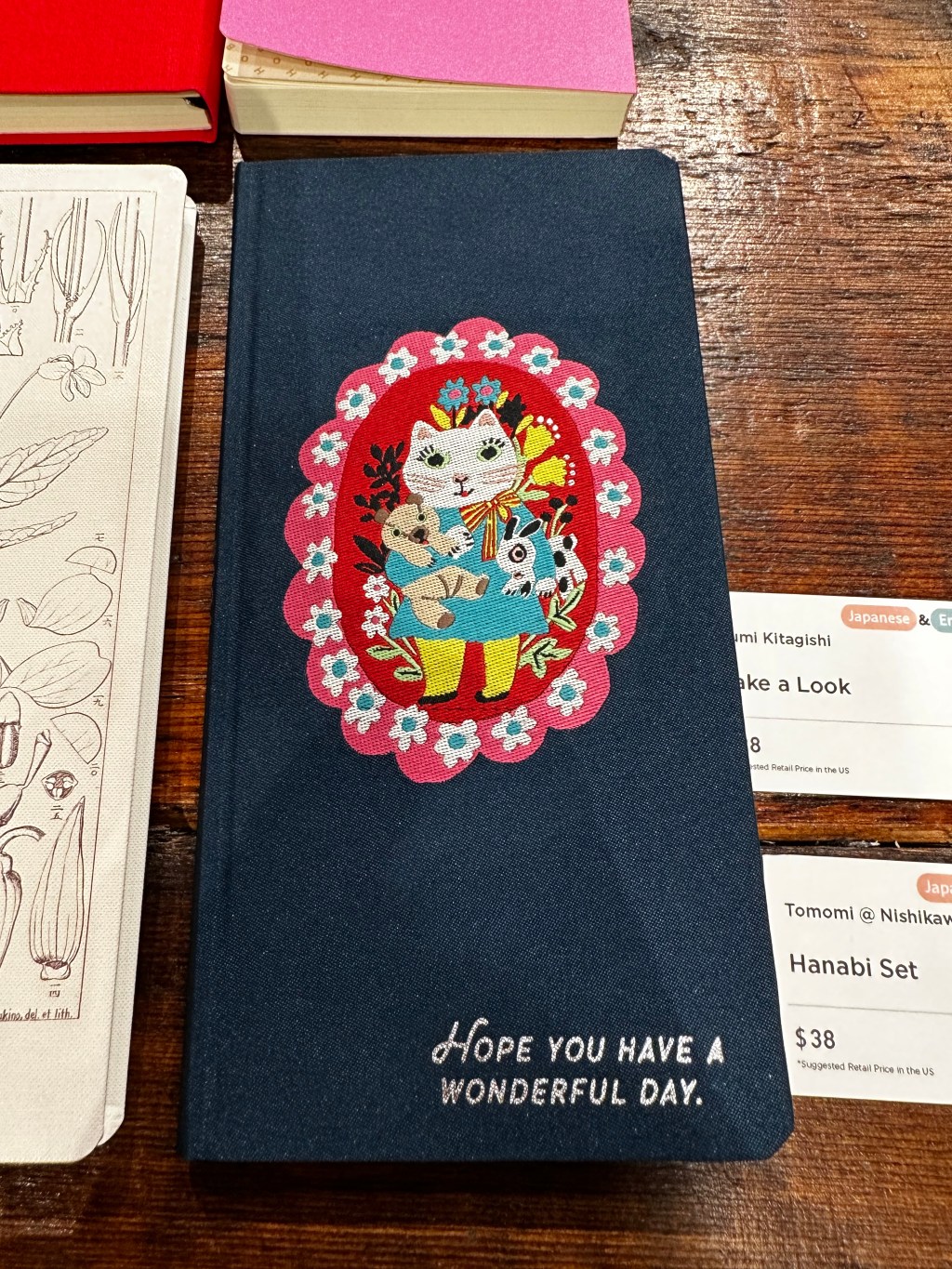
The Hobonichi Weeks layout, small size, wallet shape, Tomoe River Paper, and wide variety of designs make it a favorite book for many. It also encourages many creative uses.
In this post I explore some uses for the Weeks that take advantage of the planner’s format, but ignore its dates. Some of these are uses I’ve actually tried before, and some are ideas I plan to try, but there are others out there! If you like any of these ideas, you can shop all of Hobonichi’s past Weeks designs and use the ones you like best, without worrying about the year.
1. Catalog your collections
Inspired by a special edition Pokémon (gotta catch’em all!) Weeks from 2023, I have a Hobonichi Weeks dedicated to collecting. At first, I used it for documenting my fountain pen ink collection, swatching inks in the weekly sections. I put one color per day on the left, and wrote the name of the inks on the right. Because my ink collection continues to grow, I didn’t put them in any kind of order but I do try to group colors in the same family on the same page. I also marked my favorite colors with stickers in the margins. In the monthly section, I document my washi tape collection by putting a little sample of each tape in each square.
It took some time to swatch all the inks I already had, but since doing this I’ve really enjoyed being able to carry this catalogue around. I took it with me to a fountain pen show and to stationery stores so I can remember what inks I already have.
2. Create a guide for your favorite place
I live in New York, where people seem to always need recommendations for things. It’s also a place that’s full of multiple great options for pretty much every category. It turns out, 7 sections is a great number for tracking my “top list” because I always seek to have at least several favorites.
So in the main part of the book, the weekly section, I have more than 52 spreads to work with that can each serve as one category. On the left I write down my favorites (not in order, because I may discover new ones). On the right side, I write a narrative summary about what’s so great about this thing in my city. Categories can be anything from my favorite pizza spots to my favorite places to take a walk.
On the annual pages at the beginning, I track the temperature each day using color codes. Weather obviously fluctuates every year, but tracking the rough the temperature range shows an easy visual of seasonal changes.
I enjoy just having the book, but I imagine that when it’s complete, whenever I have a friend in town who needs a guide I can lend it to them while they’re here.
3. Use it to plan and draft a novel
Inspired by NaNoWriMo (National Novel Writing Month), I wanted to try my hand at plotting and drafting a long form fiction story. I don’t aspire to be a novel writer but I love reading fiction and the idea of planning a story, particularly one that requires building a world or unfolding a mystery, sounds like a fun challenge.
As a novice writer I also have too many ideas that need to be organized. So I have a Hobonichi Weeks Mega where, in the weekly section, I use the 7 section left side to make lists of pieces of stories—sets of characters, of places, plot points, etc. having them all on one page lets me stare at them and think/imagine. On the right side, I take notes on questions I’d need to answer, ideas for directions I can go with each thing, etc.
I have more than one story idea in my head so 50+ weeks is a great number of these spreads to have for this practice. I will develop plans throughout the year, and my hope is by the time writing month (November) comes along I will have one plot that is most developed. Then in the note pages in the back, I will write each day as part of the challenge. I’ll use the monthly pages as an index for where to find things in the weekly pages.
 Ask a Planner Nerd