
Goal setting for me is the process through which I set a North Star in some area of life, and use that as my guide for day-to-day decisions and action.
It’s not for everyone! But it can be a useful tool for moments such as:
- When we feel like we’re doing things just to do them, or like we’re box checking without purpose
- When we’re feeling aimlessness or like we’re on a hamster wheel in some area of our lives
- When we’re constantly distracted and feeling overwhelmed by things competing for our attention
- When it seems like things we wish we had or want achieve are an impossibility
- When we find ourselves trying really hard to make something happen but feel like we’re not moving forward, or like we’re not making progress quickly enough
So how does one goal set, in a way that’s actually actionable? There are many different approaches, but I’ll share one way that works for me.
1. The big picture/the point of it all: identify the life areas where you think you could have some goals
Of the following areas, choose a few that you want to prioritize, or that you wish you were being more intentional about:
- Physical
- Emotional
- Intellectual
- Creative
- Social
- Familial
- Financial
- Material
- Spiritual
- Impact / Legacy
Note: it’s important to be very honest with yourself through this exercise. I sometimes find that I unintentionally prioritize things based on what I think I should be most important, and not on what actually matters most to me. For example, I think I should be a person who cares more about intellectual pursuits than physical ones, or that I shouldn’t care so much about material things. But I do! And if I’m not honest with myself about that then I’m just wasting my own time.
2. Lifetime brainstorm: ultimate outcomes
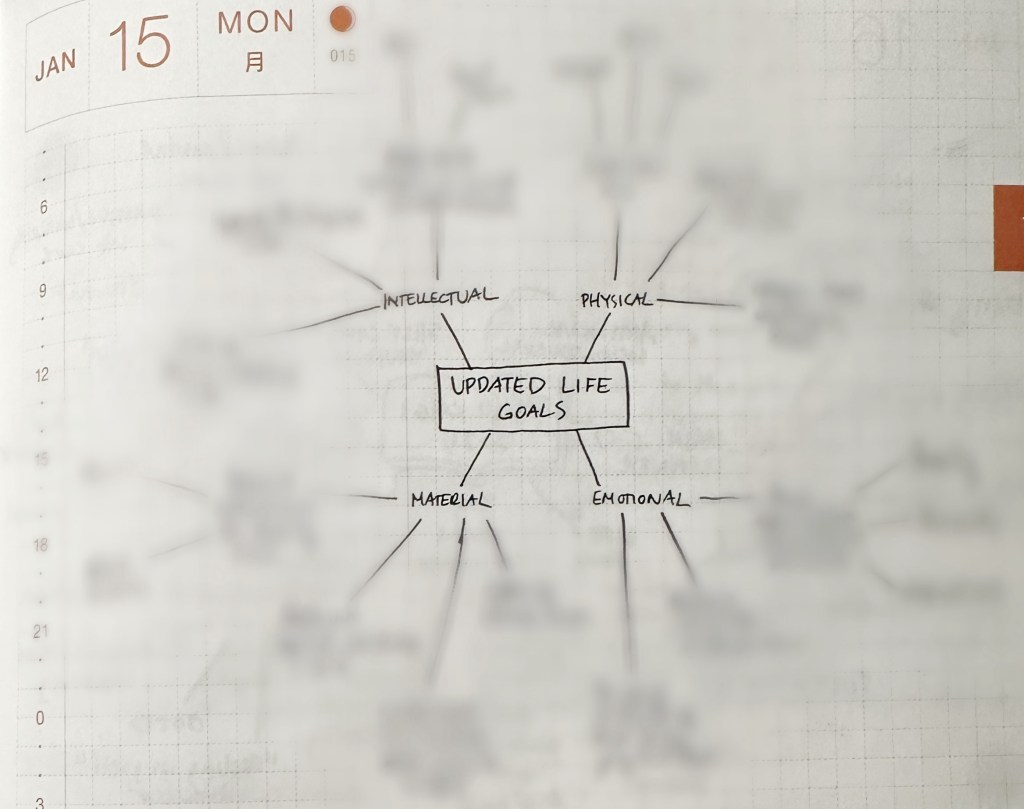
Pick any one of the few areas you prioritized, and write it at the center of a piece of paper. Set a timer for 10-15 minutes, and (I know this is morbid but) try imagining your last day in this life. What are things that would be true if you were to be content, or even proud, in that moment? Write every idea that comes to mind down on the page, flowing out of the category mind map style. This is a brainstorm, so the answers can be as mundane or as audacious as you want. They don’t have to be realistic or achievable.
3. Assess the list and pick your lifetime goals
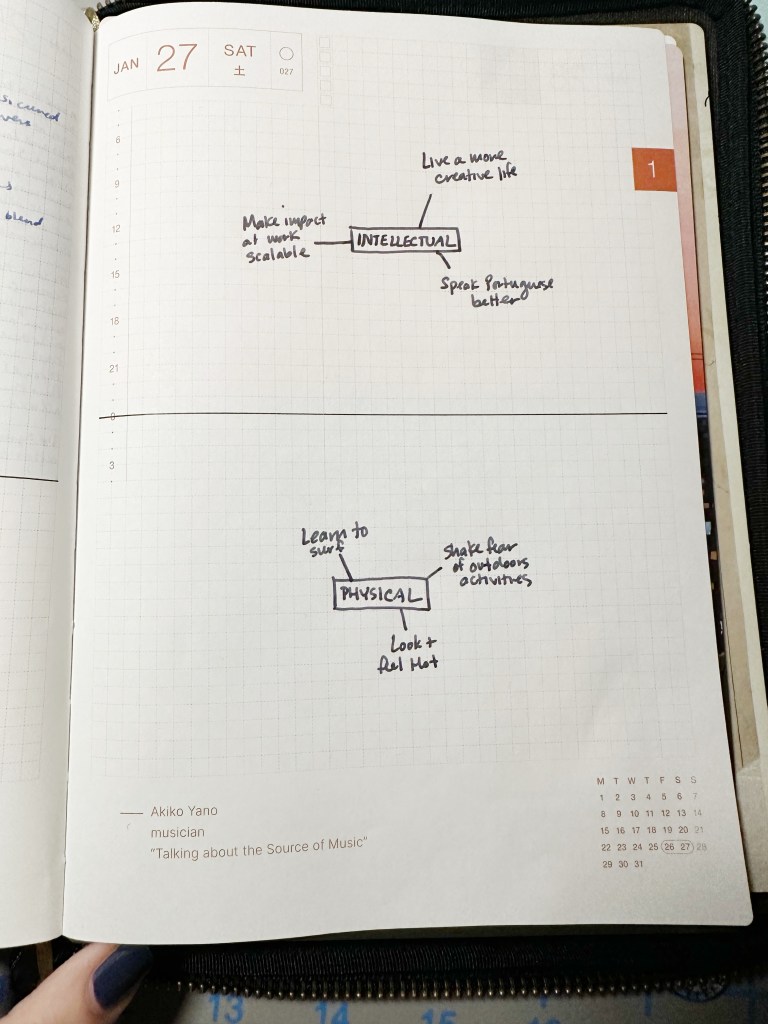
Looking at the lifetime brainstorms for each category, narrow them down to 2-3 tops for each category, and circle those. Choose the ones that you know you feel the most passionate about, especially those that you’re consistently passionate about. Choose the ones that are appropriately ambitious for a lifelong goal, but don’t be afraid to stretch what you think is possible!
4. Set milestones
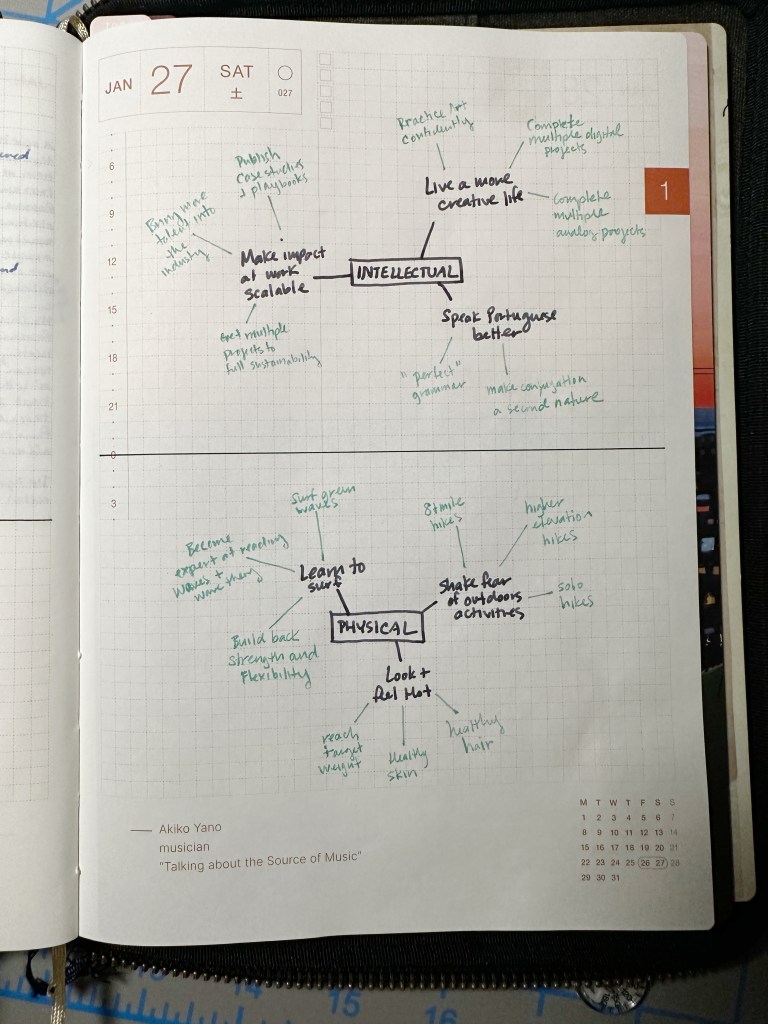
If you’re running out of space, draw new mind maps—one for each category—and transfer over your top lifelong goals. The next level we’re branching out to now will be the medium term goals—milestones you’d have to hit in 3, 5, or 10 years in order to be able to achieve that lofty lifetime goal you set. When you complete this process your milestones will should feel like a road map to your lifetime goals.
Note: While you’re doing this part you’re highly likely to discover some dependencies. By that, I mean achievements in one area might be a prerequisite for achieving something else in another area. For example, if your goal is to travel to every continent in your lifetime, a dependency might be that you have to get a certain kind of job or save up a certain amount of money to make it come true.
If you discover any dependencies, the prerequisite goals probably need to be of utmost priority.
6. Make a plan working backward from your nearest milestone
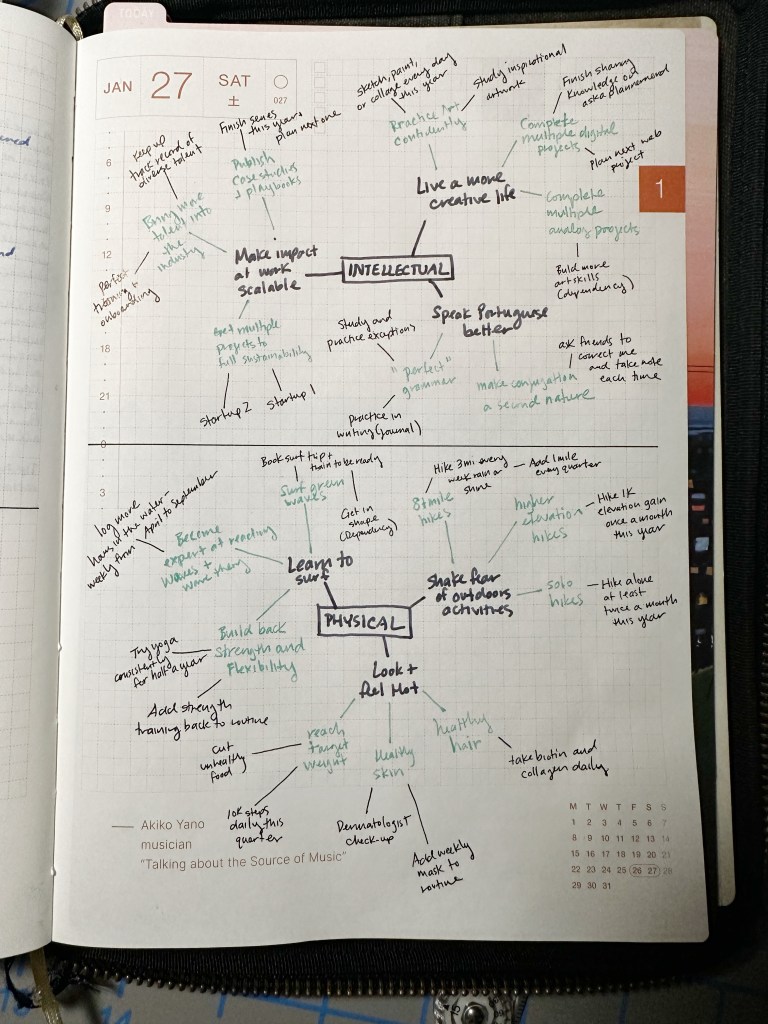
With your roadmap in place, it’s time to get tactical. In order to get to the first milestone in your journey, what do you have to get done this year, and in each quarter and each month?
Flowing out another layer from the milestones/medium term goals in your mind map, write down your project plan for the year on each thing. This could be an amount of money you need to put away with each paycheck if the goal is money related; if you’re working on a fitness goal you might spend your first month working on sleep and scheduling habits, your second month on developing a targeted routine, and so on. By the time you finish this part, you should have a pretty clear idea of what you need to accomplish this month, and therefore this week—and you should be ready to take your first step toward the future you truly want.
7. If you’re feeling a bit overwhelmed
If following step six you feel hesitant to start, try this trick: with your first month’s goals in mind, write down the first three micro tasks you’ll need to do. It could be as small as waking up earlier tomorrow or making an appointment. Whatever the first three things are, make that tiny to do list. Then, when you’ve crossed them all off, write the next three things, and keep going from there. Our goals may be lofty but we take the steps to get to them one at a time. Remember to celebrate your progress, too—because whether we reach the end or not, it feels good when you know you did your best and kept moving forward.
 Ask a Planner Nerd