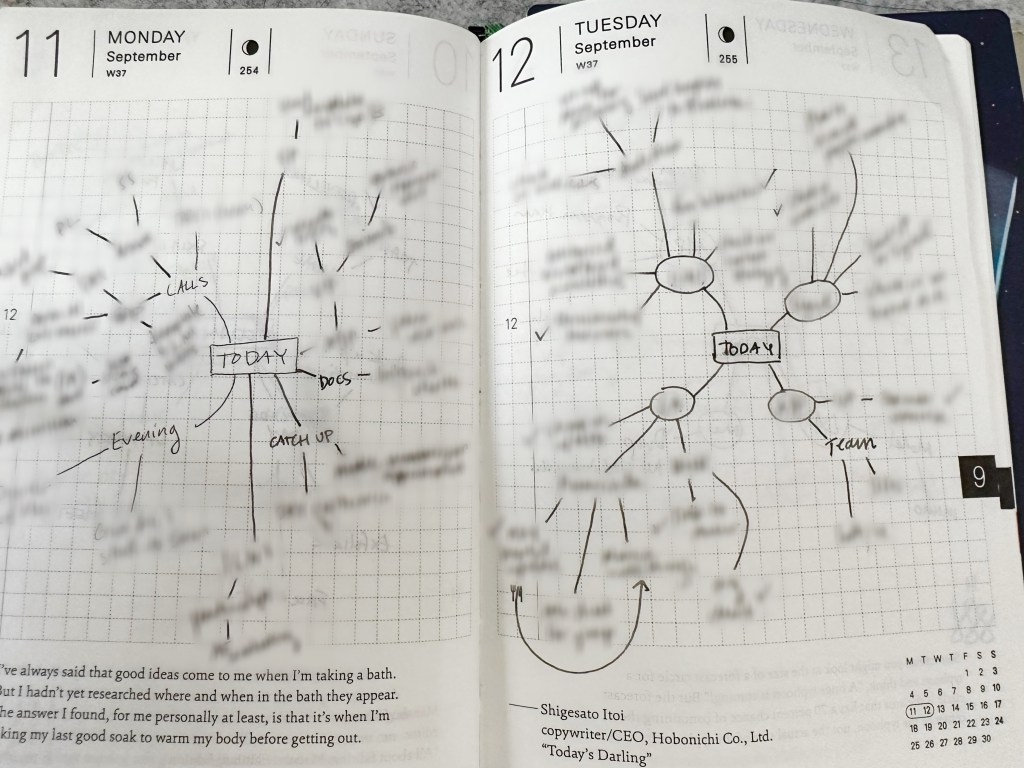
Mind maps are diagrams that can be used to visualize information in a way that can show how different things relate to each other.
Whereas lists are linear—one thing follows the next—mind maps can branch out in different directions, which in my opinion more accurately depicts how most things in life actually develop. That’s why over the years I’ve found that mind maps work better for me to track my to dos than lists and outlines.
For daily planning, I start the map with “TODAY” at the center. From there, the next level out are my big priorities for the day. Some days are organized around the projects I’m tracking. Some days are divided between types of activities (e.g. meetings, working on documents).
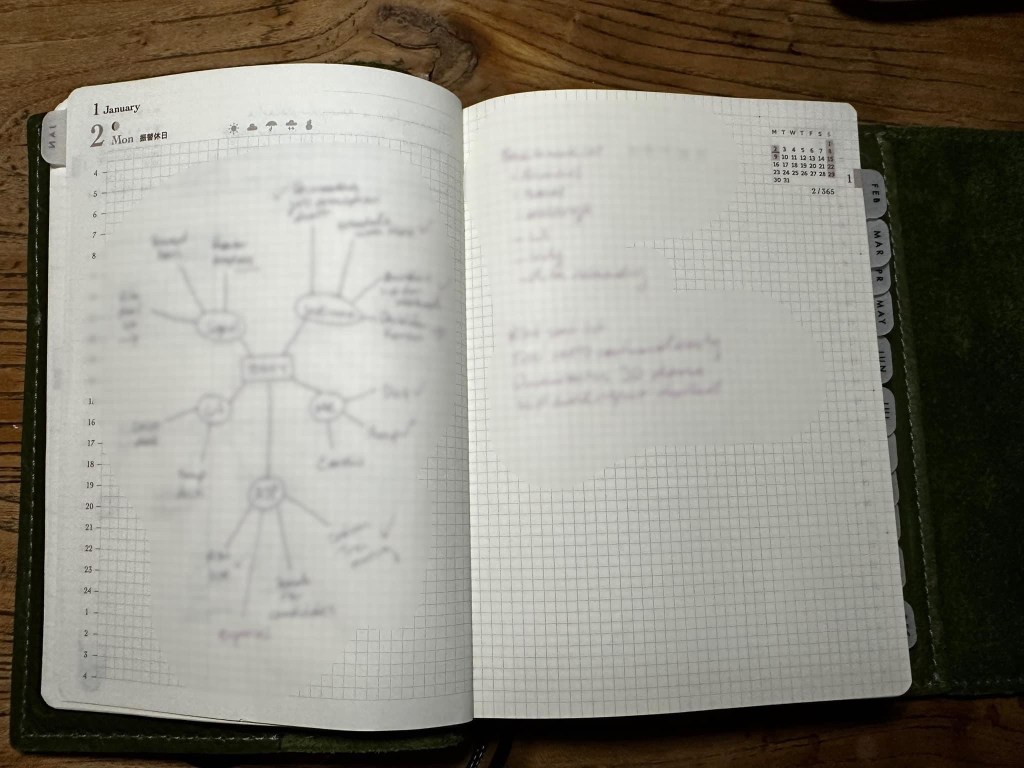
Tasks branch out another level down, or sometimes a few more levels out. The advantage of writing them this way, is I start with what has to get done and am able to drill down into subcategories without pushing other things down and deprioritizing things that are not actually lower priorities.
Once I’m done laying my day out, the visual of big categories of priorities branching out into small tasks is an accurate picture of my day, proportionate to the complexity of each bucket of things I need to do. When I flip back through my planner, if I have to see what I was doing on any give day, I can easily remember what that day was actually like.
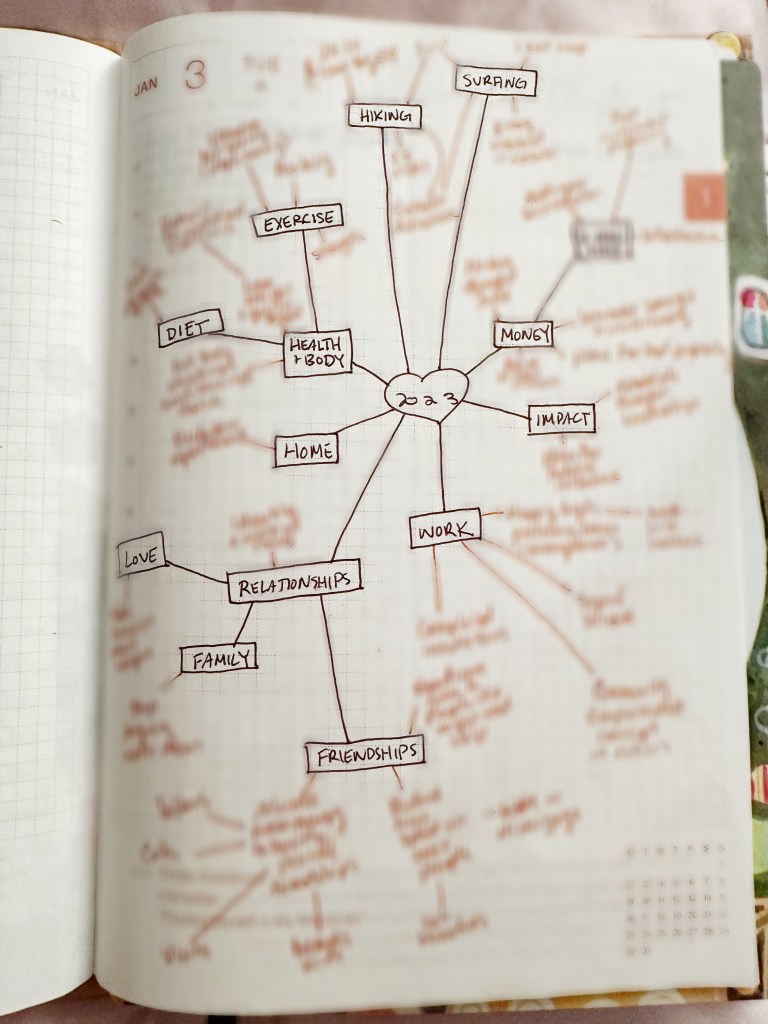
Mind maps are also great for higher level priority setting at the start of each month, quarter and year. I do monthly mind maps to feel better prepared for everything coming. I also do lifetime mind maps, and build back from the things I’d like to accomplish in my life to 10 year and 5 year mind maps. These help ground me in what matters to me most when I’m making major decisions. I’ll do another post on life planning (as opposed to daily planning)!
 Ask a Planner Nerd